

Blog
Shock Absorbers : Signs of Wear and How They Affect Your Ride in Pakistan


Shock absorbers rarely get attention until a ride starts feeling noticeably rough or unstable — by which point they’ve often been wearing down gradually for months. On Pakistan’s mix of potholed city roads, speed breakers, and long highway stretches, shocks take a real beating, and driving on worn-out units affects far more than just comfort: it impacts braking distance, tyre wear, and overall vehicle control.
This guide explains what shock absorbers actually do, how to spot the signs they need replacing, and what to expect in terms of cost and lifespan.
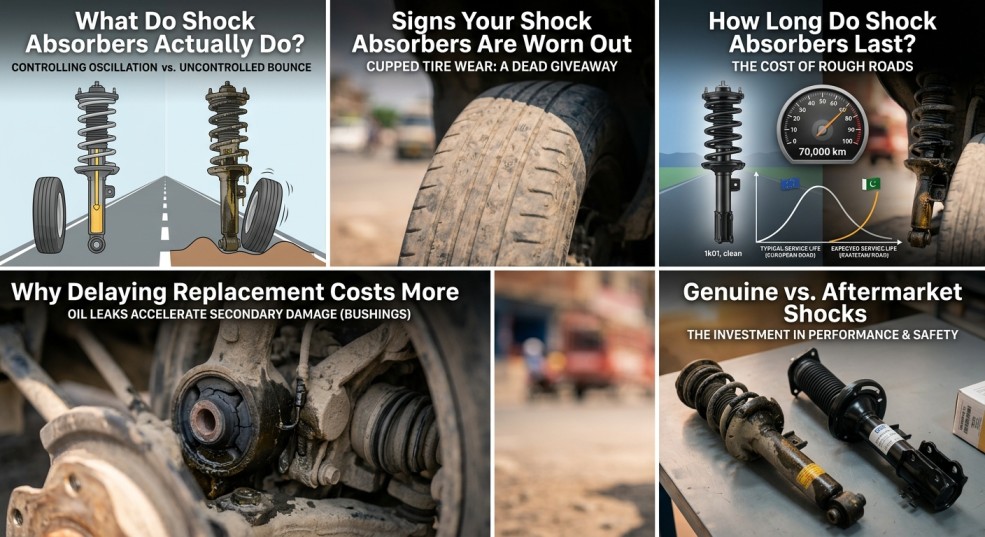
What Do Shock Absorbers Actually Do?
Shock absorbers control the motion of your car’s springs after they compress over a bump, preventing the car from continuing to bounce. Without functioning shocks, your car would keep oscillating up and down after every bump, reducing tyre contact with the road and making both handling and braking significantly less predictable — especially at highway speeds.
Signs Your Shock Absorbers Are Worn Out
- Excessive bouncing after hitting a bump or speed breaker
- Nose-diving forward sharply when braking
- Body roll or leaning noticeably when cornering
- Uneven or ‘cupped’ tyre wear patterns
- Visible oil leakage or wetness on the shock body
- Clunking or knocking noises over rough roads
- Longer stopping distance than expected
How Long Do Shock Absorbers Last?
In general driving conditions, shock absorbers last 60,000–100,000 km. In Pakistan, where poor road surfaces and frequent speed breakers are the norm, many drivers see noticeable wear closer to the 50,000–70,000 km range — particularly on the front shocks, which handle more load during braking and cornering.
Why Delaying Replacement Costs More
Worn shocks don’t just make for an uncomfortable ride — they accelerate wear on other suspension components like bushings, control arms, and even tyres, since the wheel isn’t maintaining consistent contact with the road. Replacing shocks proactively is almost always cheaper than replacing shocks plus the secondary damage they caused.
Shock Absorber Replacement Costs in Pakistan
- Economy hatchback (per shock): PKR 3,000 – 7,000
- Sedan (per shock): PKR 4,000 – 12,000
- SUV/Crossover (per shock): PKR 8,000 – 20,000
- Labour charges (per axle): PKR 1,500 – 3,500
Genuine vs Aftermarket Shocks
Shock absorbers are a safety-critical component, and quality varies enormously in the aftermarket segment. A poorly manufactured shock may feel fine for the first few thousand kilometers before losing damping performance rapidly. It’s generally worth paying for a reputable brand or genuine part here rather than choosing the cheapest available option — the performance difference shows up exactly when you need it most, during emergency braking or a sudden swerve.
Conclusion
Shock absorbers are one of those components that fail so gradually most drivers don’t notice until they compare their car to a freshly-serviced one. If your ride feels bouncier, less stable in corners, or your tyres are wearing unevenly, it’s worth having your shocks inspected — replacing them on time protects both comfort and genuine safety.
Shop genuine spare parts for your vehicle at PartEx — Pakistan’s trusted online marketplace for automobile parts.
 Suzuki
 Honda
 Toyota